Imagine feeling overwhelmed most days of the week. Not occasionally, not during finals, but as part of your normal day-to-day. For many teens in California, that’s not hypothetical.
Two-thirds of students report feeling overwhelmed, stressed, or burned out at least three days a week, and half say they feel this way at least five days a week.
Together, they surveyed 3,911 teens across California about mental health challenges, help-seeking, and what needs to change.
It's Not One Thing. It's Everything at Once.
When teens talk about stress, it’s usually not one thing. It’s school, family pressure, social stuff, lack of sleep, and trying to keep up with everything all at once.
What Students Are Experiencing
- Burnout and anxiety were the most common experiences reported, affecting roughly two-thirds of students.
- Family and home were also a major source of stress for many teens.
- Nearly half report depression or persistent sadness.
- More than a third describe loneliness or isolation.
And for nearly three in ten students, the weight of these pressures has become serious enough to involve thoughts of self-harm or suicide.
When Academic Pressure Leaves No Room to Breathe
Academics underlie much of this. Half of students rate school as an 8 or higher contributor to their stress, and more than 1 in 5 rate it a 10 out of 10.
One thing that stood out to us was how school stress affects everything else in students’ lives.
Nearly one in four students say they only have enough time to meet basic needs, such as sleep, eating, and hygiene, two days a week or less.
When students feel pressure to constantly achieve more, the time they need to rest, connect with people, or take care of themselves starts to disappear. Students connect this directly to increasing academic competition and expectations. At the same time, many are also dealing with family stress, anxiety, and chronic sleep deprivation. Each one makes the others harder to carry.
Not Everyone Is Carrying the Same Load
While stress is widespread, it is not experienced equally.
Students who identify as transgender, nonbinary, or genderqueer report significantly higher levels of distress than their cisgender peers.
- 34.9% rate their mental health as a ten out of ten contributor to stress, compared to 8.3% of cisgender boys and 10.5% of cisgender girls.
- Similarly, 11.9% rate family or home life as a ten out of ten contributor, compared to 6.6% of cisgender girls and 5.2% of cisgender boys.
These numbers show that stress can feel even heavier for students who do not feel fully supported at home, at school, or in their communities.
Help-Seeking Is Hard. Here's What Gets in the Way.
Nearly three in four teens say they are unlikely to use school-based mental health support.
Many are managing everything, including academic pressure, anxiety, and challenges at home, entirely on their own. Nearly a third say they handle difficulties independently, and one in six does not know where to go for help.
For many teens, asking for help feels risky. The decision to seek help isn’t just practical, it’s personal, shaped by concerns about how they’ll be seen and whether they’ll be understood.
What Gets in the Way
- 62% worry about being judged or avoid asking for help because they feel their problem is not serious enough.
- 58.1% feel embarrassed or ashamed about struggling or asking for support.
- Many doubt whether support will actually help, or whether adults will understand what they are going through.
Students also described concerns that went beyond simply knowing support was available. Many were already thinking through the risks before they ever asked for help: what happens if I say something I cannot take back?
"I guess I just don't want to talk to people who might be mandated reporters."
That quote helps explain why so many teens hesitate to reach out. Schools often assume that having a confidentiality policy is enough. Students are telling us that not understanding the policy is itself a barrier.
Teens are often more willing to encourage a friend to get help than to seek it themselves. Asking for help can feel really vulnerable. It means putting yourself out there, risking judgment, and trusting that someone will understand. For many teens, that risk feels too high. Just making support available is not always enough.
When Healthy Coping Feels Out of Reach
Nearly a quarter of students say they are not confident handling stress and challenges in healthy ways. When support or coping tools feel hard to access, some teens turn to substance use or other harmful coping behaviors instead.
What Students Are Seeing
- 60% of students report observing peers engage in moderate to frequent substance use.
- One in three (33.6%) say this happens several times a week or daily.
Students point to two main drivers: psychological stress and mental health challenges, cited by nearly three in four (72%), and peer pressure, cited by nearly eight in ten (77.8%).
Social Media Isn't Screen Time
Students’ experiences with social media did not fit a simple story. Just over half report feeling connected to others after using social media, suggesting that these platforms can sometimes help teens feel less alone. At the same time, about a third reported that social media had no major emotional effect on them. Others described regular exposure to drama, breaking news, and emotionally intense content that constantly pulls for attention and can leave people feeling overwhelmed or emotionally numb over time.
Many of these experiences align with current research on social media and mental health. The findings suggest that what teens encounter online may matter just as much as how much time they spend there. As one AIM-supported researcher recently noted, what matters most is whether online spaces make teens feel more supported or more distressed during difficult moments.
This was especially true for transgender, nonbinary, and genderqueer youth. For teens who feel isolated or unsupported in their schools, homes, or communities, online spaces can sometimes offer connection and support they struggle to find elsewhere.
Teens Are Not Just Identifying Problems — They’re Offering Solutions

The students in AIM Ideas Lab are not just documenting these challenges. They are using the data to develop solutions grounded in lived experience, translating what teens are facing into practical, youth-driven strategies that make support more accessible, relevant, and effective.
Fix What's Broken Inside Schools
When students were asked what would make them more likely to use mental health support at school, many said they did not even know that support was available.
"I think a lot of times students don't get help just because they don't know it's there."
Another student wrote:
"Telling us kids what services they can provide for us because we have no clue."
But knowing support exists is only part of the issue. Many teens said it can feel hard to get help during the school day because missing class can put them behind.
One student put it simply:
"Going to the wellness center messes with my schedule."
Another asked directly for schools to
"get rid of time limits for being out of class."
Participants also said schools need to explain confidentiality and mandated reporting more clearly, before teens are sitting in a counselor’s office trying to figure out what they can safely say.
Students were clear about what they want from schools:
- Counselors who are actually available
- Scheduling that does not penalize help-seeking
- Honest conversations about what students can and cannot say privately before they are in crisis
Get Back to Basics
When teens were asked what helps them handle stress, they did not describe programs or interventions. They described their lives: talking to a friend, making music, taking a walk, baking, painting, playing with a pet, praying, being with family. Teens already know a lot of the things that help them feel better.
What they need is support in building and strengthening those foundations, on and off campus. Spending time with people they trust. Being active. Having creative outlets. Getting time to slow down. And the chance to learn and practice coping skills like breathing and mindfulness during calm moments, not just crisis ones.
That last part matters more than it might sound: a breathing exercise learned in an English class on a regular Tuesday is a tool a student can actually reach for when things get hard.
It is much harder to use coping skills in a crisis if students have never practiced them before.
Schools and communities do not need to invent entirely new solutions. They need to give students more time and space for the people, activities, and coping tools that already help them manage stress.
Keep Listening
The students who conducted this research did not just document what their peers are going through. Through AIM Ideas Lab, they built skills in research, critical thinking, advocacy, and stress management. The program included breathing exercises, mindfulness, and reflection because people are more likely to use these skills in difficult moments when they have practiced them beforehand.
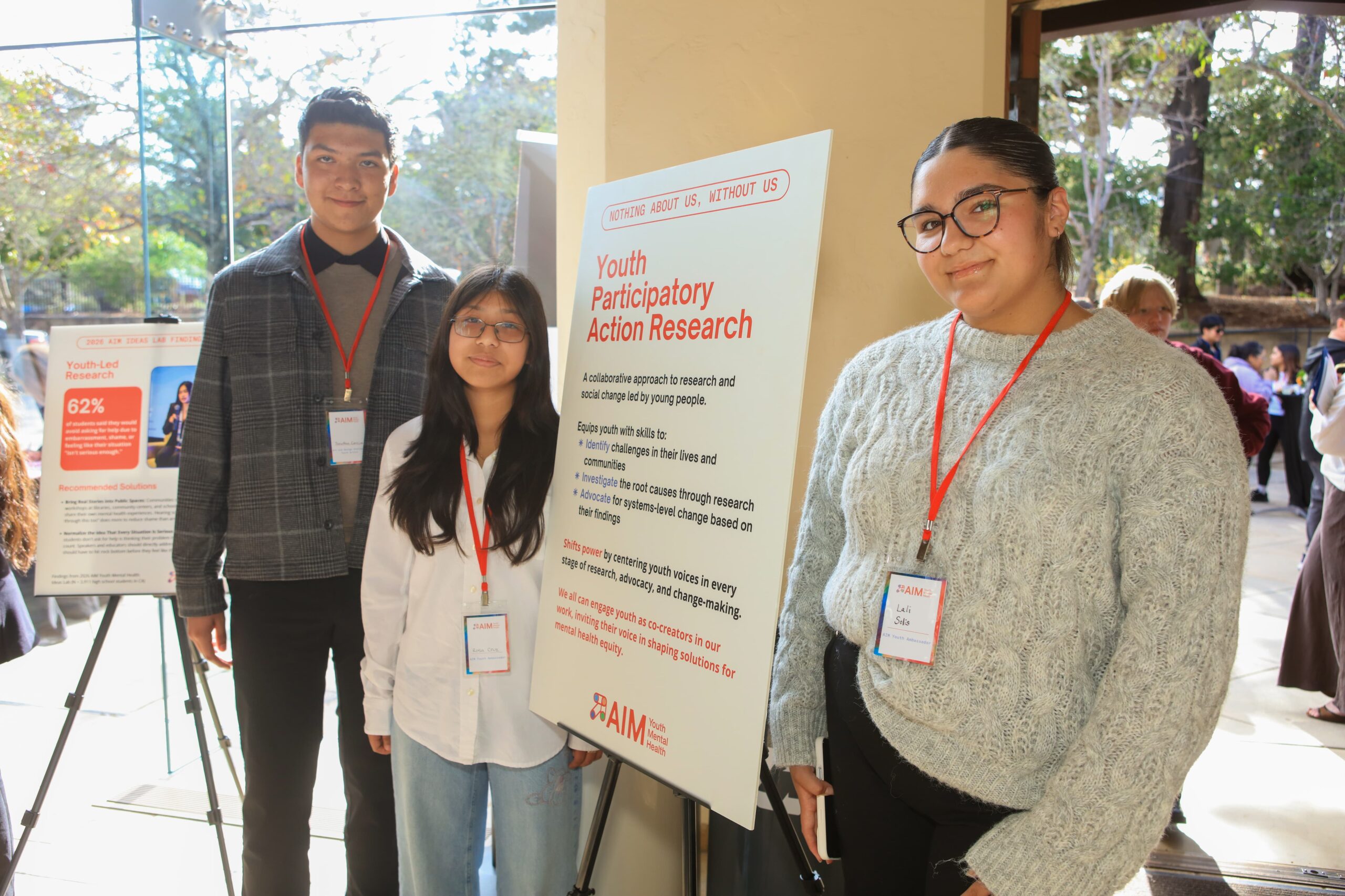
The process also showed why youth-led research matters. Youth Participatory Action Research (YPAR), where young people ask the questions, gather the data, and develop solutions, can lead to insights adults might otherwise miss because the research is shaped by young people’s real experiences. For students who want to keep going, AIM Youth Ambassadors offers young people a way to stay involved and turn research into action in their communities.
The teens in this report are already paying attention to what’s happening around them, asking hard questions, and offering specific, honest answers about what needs to change.
Continuing to include young people in these conversations is part of how real change happens.
What This Research Can and Can't Tell Us
This research reflects the perspectives of students who participated through AIM Ideas Lab, a structured youth research program, and of the peers they surveyed.
Because participation was not random, findings may not fully represent the range of California teen experiences, particularly among teens less connected to school-based programming. The data is self-reported and cross-sectional, capturing perceptions at a single point in time rather than tracking change. Sensitive measures, including self-harm and substance use, may be subject to underreporting or social desirability effects.
It can tell us what nearly 4,000 young people across 71 California schools are experiencing right now. Future research should go deeper on:
- boys’ mental health and help-seeking behaviors,
- the evolving role of social media and AI in how teens cope and connect,
- differences in access to care across communities, and
- how findings vary across urban, suburban, and rural settings and income levels.
Tracking these issues over time could help show whether things are actually improving for young people and keep teens involved in shaping conversations and decisions that affect their lives.